Razer Huntsman V3 Pro Mini vs SteelSeries Apex Pro Mini
Wired analog optical against wireless magnetic: the two benchmark 60% boards, head to head.
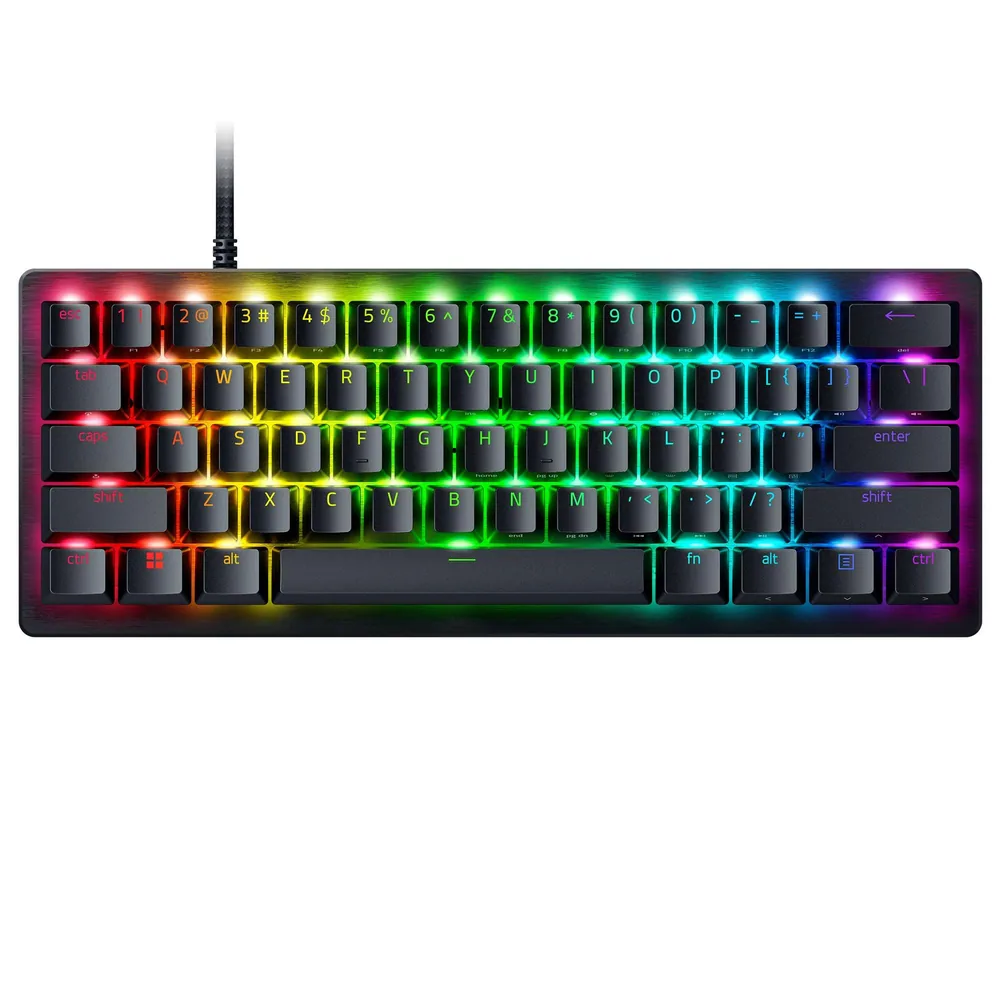
Razer Huntsman V3 Pro Mini
60% board with Gen-2 analog optical switches, Rapid Trigger and Snap Tap
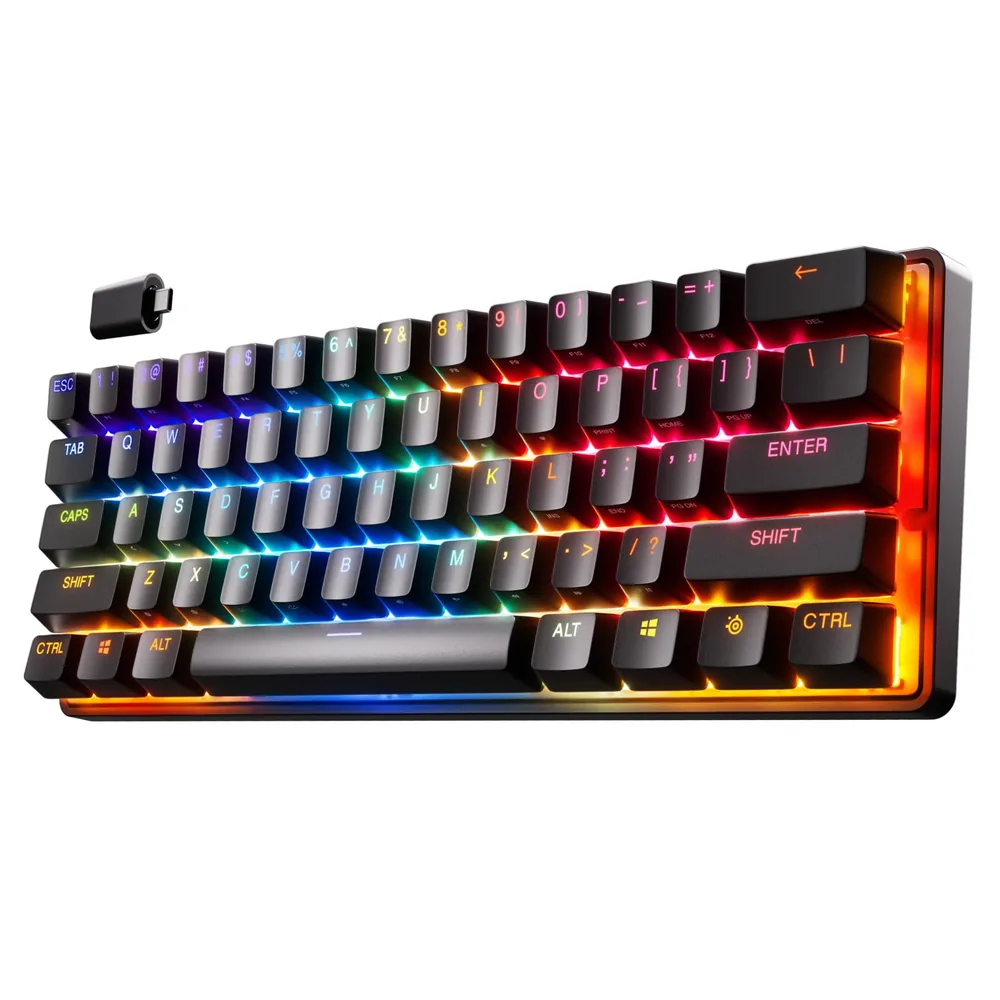
SteelSeries Apex Pro Mini Wireless
Wireless 60% with OmniPoint 2.0 magnetic switches and 40 actuation levels
Spec by spec
The best value in each row is highlighted in green, per that spec's criterion.
| Razer Huntsman V3 Pro Mini | SteelSeries Apex Pro Mini Wireless | |
|---|---|---|
| Switch technology | Analog optical (Gen-2) | Magnetic (Hall Effect) |
| Switch model | Razer Analog Optical Gen-2 | OmniPoint 2.0 HyperMagnetic |
| Minimum actuation | 0.1 mm | 0.1 mm |
| Maximum actuation | 4 mm | 4 mm |
| Adjustment step | 0.1 mm | 0.1 mm |
| Rapid Trigger | Yes | Yes |
| Rapid Trigger minimum | 0.1 mm | 0.1 mm |
| SOCD resolution / Snap Tap | Razer Snap Tap (via firmware) | Rapid Tap (software/firmware) |
| Actuation force | 40 g | — |
| Polling rate | 1,000 Hz | 1,000 Hz |
| Polling interval | 1 ms | 1 ms |
| Connectivity | Detachable USB-C (wired) | 2.4 GHz Quantum 2.0 + Bluetooth 5.0 + USB-C |
| Battery life | — | 30 h |
| Format | 60% compact | 60% compact |
| Key count | 61 | 61 |
| Keycaps | Textured doubleshot PBT | Doubleshot PBT |
| Plate | Aluminium | Series 5000 aluminium |
| Chassis | Aircraft-grade aluminium | Aluminium |
| Hot-swap | No | No |
| Weight | — | 546 g |
| Warranty | 1 years | 1 years |
What really separates these two
Switch technology: optical against magnetic
Razer uses Gen-2 analog optical switches, SteelSeries uses OmniPoint 2.0 magnetic ones. Both read the actual position of the stem instead of waiting for a contact, so both offer Rapid Trigger and actuation adjustable between 0.1 and 4.0 mm. In practice the performance difference between them is negligible: picking one over the other on sensor technology alone is splitting hairs. What does change your day-to-day is everything else.
Cable against wireless: what you actually lose
The Huntsman V3 Pro Mini is wired only; the Apex Pro Mini Wireless adds 2.4 GHz and Bluetooth. Both quote 1000 Hz polling — a 1 ms interval — so SteelSeries' wireless costs you no latency as long as you're on the 2.4 GHz receiver. The real cost of going wireless is 30 hours of battery life and the fact that Bluetooth drops polling to 125 Hz. In exchange you get a desk with no cable running in front of the mouse, which on a 60% with wide movement is worth more than it sounds.
Extras: Snap Tap against dual-action keys
Razer bets on Snap Tap, which prioritises the last direction pressed and makes strafe changes instant — with the caveat that some leagues restrict this class of feature. SteelSeries bets on dual-action keys, assigning two different commands to the same key depending on press depth, plus a built-in OLED display for quick changes. Two different philosophies: Razer optimises pure competitive movement, SteelSeries optimises versatility.
If you compete in tactical shooters and the cable doesn't bother you, the Huntsman V3 Pro Mini is more direct and somewhat cheaper in its 1000 Hz version. If you value a clear desk, the OLED display and dual-action keys, and you accept charging the board every few days, the Apex Pro Mini Wireless is the only one of the two that offers it.
Affiliate disclosure: LatenciaCero is a participant in the Amazon Associates Program. The product links on this site are affiliate links, and if you buy through them we earn a commission at no extra cost to you. Amazon and the Amazon logo are trademarks of Amazon.com, Inc. or its affiliates.