AOC Q27GAZD vs ASUS ROG Strix XG27AQDMG
QD-OLED against WOLED: two 1440p panels at 240 Hz with very different prices.
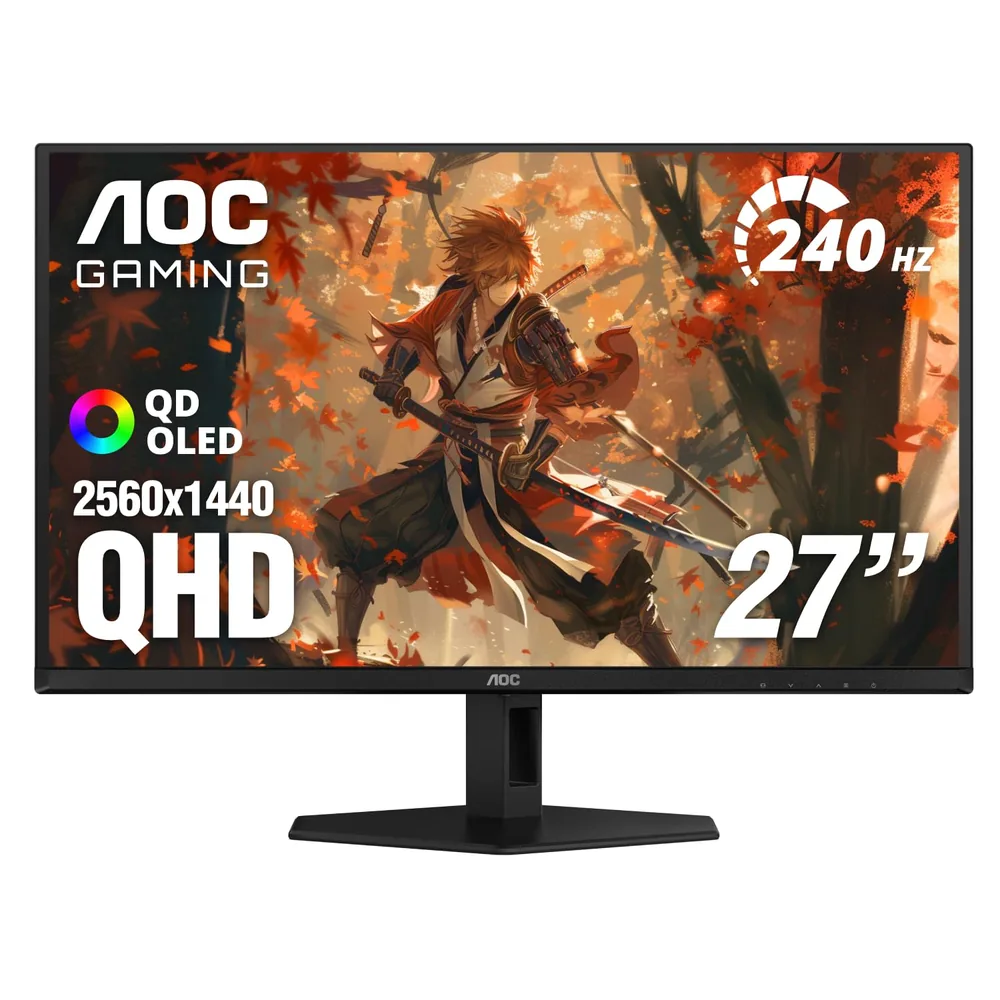
AOC Q27GAZD
27" QD-OLED, 1440p at 240 Hz with HDR400 True Black
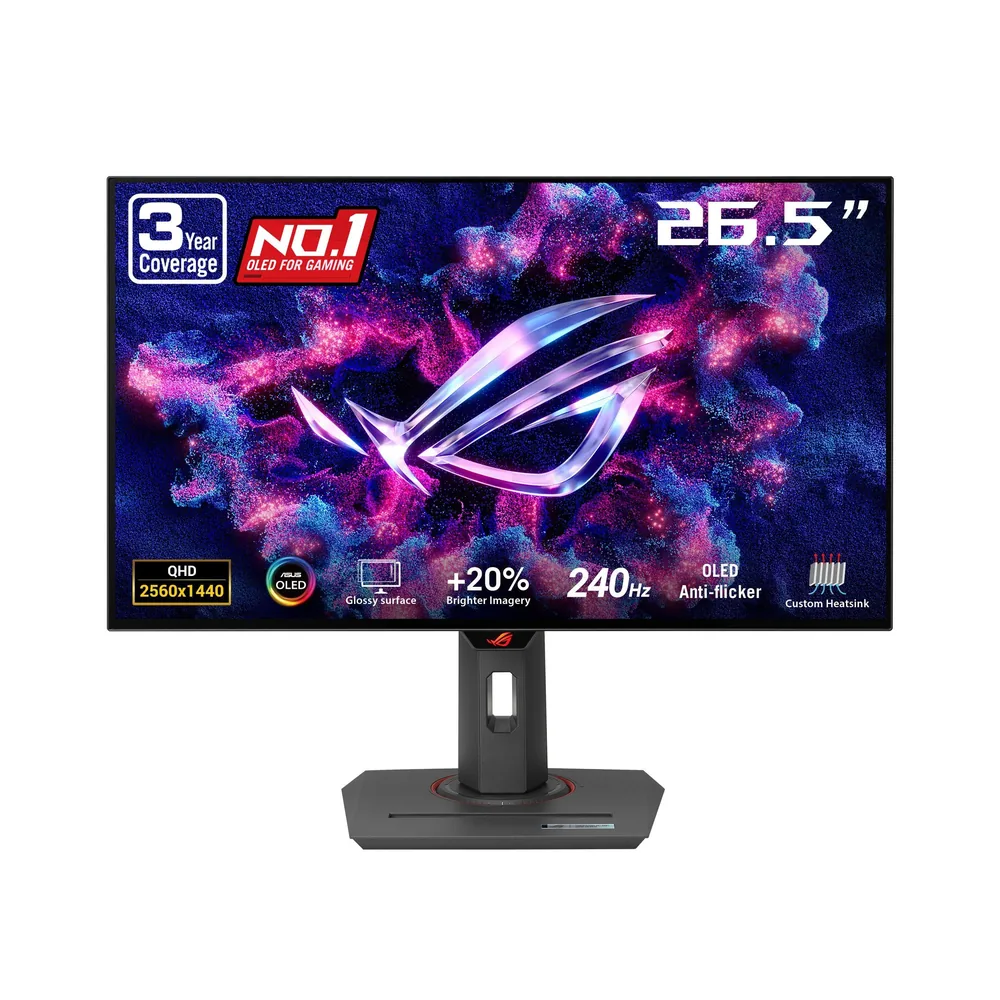
ASUS ROG Strix XG27AQDMG
26.5" glossy WOLED, 1440p at 240 Hz with 0.03 ms GtG
Spec by spec
The best value in each row is highlighted in green, per that spec's criterion.
| AOC Q27GAZD | ASUS ROG Strix XG27AQDMG | |
|---|---|---|
| Diagonal | 27 " | 26.5 " |
| Panel type | QD-OLED | WOLED (3rd generation) |
| Finish | Glossy | Glossy |
| Resolution | 2560 x 1440 (QHD) | 2560 x 1440 (QHD) |
| Contrast | 1,500,000:1 | OLED contrast (absolute black) |
| DCI-P3 coverage | 110.2 % | 99 % |
| HDR | HDR400 True Black | Yes |
| Refresh rate | 240 Hz | 240 Hz |
| Frame duration | 4.17 ms | 4.17 ms |
| Response time (GtG) | 0.03 ms | 0.03 ms |
| Motion blur reduction | Native OLED response (no strobing) | Native OLED response (no strobing) |
| Adaptive sync | G-SYNC Compatible / Adaptive-Sync | G-SYNC Compatible |
| Video ports | DisplayPort + HDMI | 2 x HDMI + DisplayPort |
| Stand adjustments | Basic stand according to buyer reviews | Adjustable stand, VESA compatible |
| Competitive extras | HDR400 True Black, 147.6% sRGB coverage | ROG OLED Anti-flicker, OLED Care, dedicated heatsink |
| Weight | 8.03 kg | 6.7 kg |
| Warranty | 3 years | 3 years |
What really separates these two
QD-OLED against WOLED: where the colour comes from
The AOC's QD-OLED emits blue light and converts it with quantum dots, with no colour filters eating energy; the ASUS's WOLED starts from a filtered white subpixel. The result is that the AOC quotes 110.2% DCI-P3 against the ASUS's 99%, with more saturated colour. The classic QD-OLED trade-off is that blacks can look slightly purple under strong ambient light, while WOLED keeps them more neutral.
Speed: a technical tie
Both are 2560 x 1440 at 240 Hz with 0.03 ms GtG and G-SYNC compatible sync. In pure competitive performance there's nothing to choose: the same 4.17 ms per frame and the same instant pixel response. Any in-game difference will come from your GPU, not the monitor.
Where the price difference sits
Not in the panel, but around it: the ASUS adds a dedicated heatsink, OLED Care functions, Anti-flicker technology, more ports (two HDMI and two USB 3.2) and a better stand. Reviews of the AOC point precisely at the basic stand and the four-button menu as its weak spots. If the monitor is going on a VESA arm, a good chunk of that difference stops mattering to you.
For maximum performance per euro, the AOC Q27GAZD: the same 240 Hz, 0.03 ms panel, more colour and considerably less money. If you value the dedicated cooling, the panel protections and a fully adjustable stand — or you won't be using a VESA arm — the ASUS justifies its premium.
Affiliate disclosure: LatenciaCero is a participant in the Amazon Associates Program. The product links on this site are affiliate links, and if you buy through them we earn a commission at no extra cost to you. Amazon and the Amazon logo are trademarks of Amazon.com, Inc. or its affiliates.