ASUS ROG OLED technology vs BenQ Zowie Fast TN
0.03 ms and absolute black against 280 Hz with DyAc 2: the two philosophies of the competitive monitor.
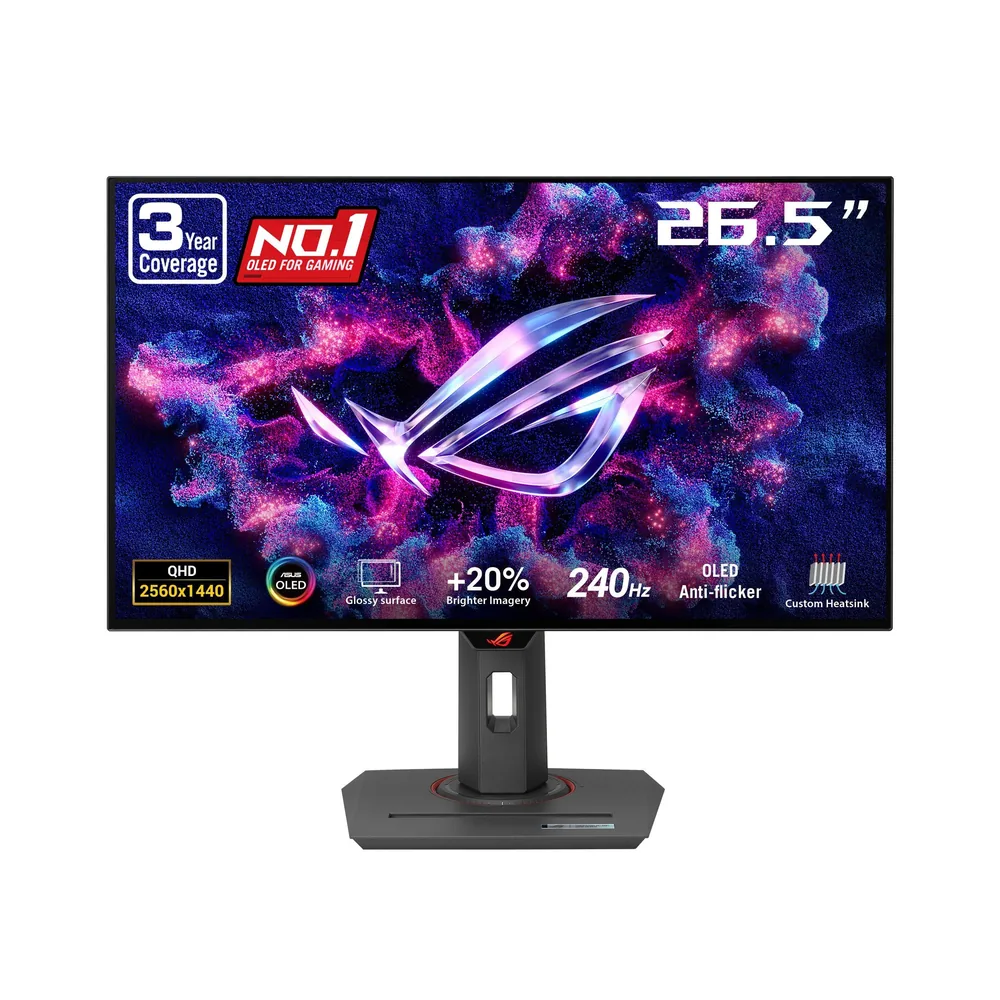
ASUS ROG Strix XG27AQDMG
26.5" glossy WOLED, 1440p at 240 Hz with 0.03 ms GtG
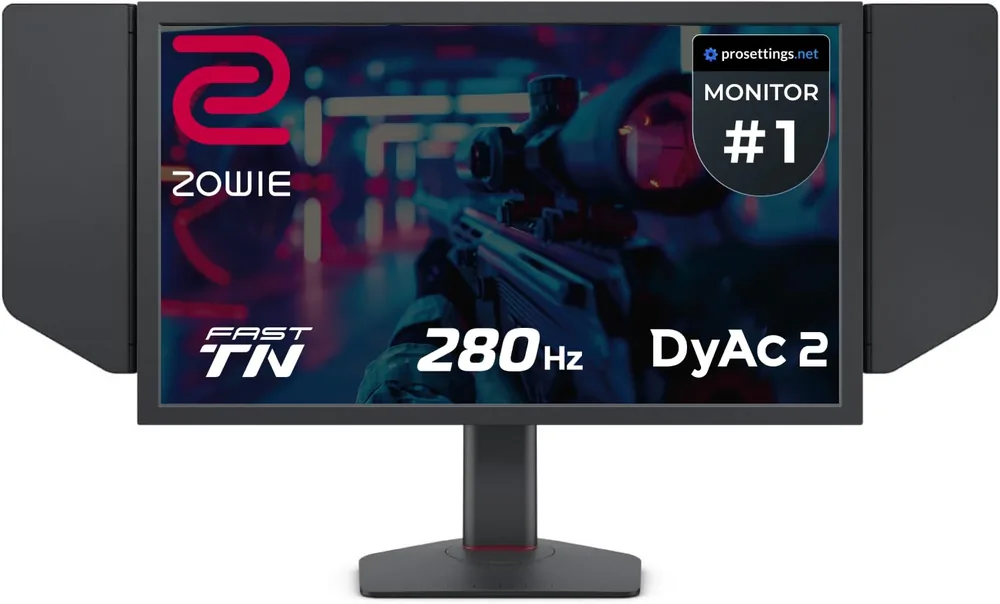
BenQ Zowie XL2546X+
24.1" Fast TN at 280 Hz with DyAc 2: the benchmark for motion clarity
Spec by spec
The best value in each row is highlighted in green, per that spec's criterion.
| ASUS ROG Strix XG27AQDMG | BenQ Zowie XL2546X+ | |
|---|---|---|
| Diagonal | 26.5 " | 24.1 " |
| Panel type | WOLED (3rd generation) | Fast TN |
| Finish | Glossy | Matte |
| Resolution | 2560 x 1440 (QHD) | 1920 x 1080 (Full HD) |
| Brightness | — | 320 nits |
| Contrast | OLED contrast (absolute black) | 1000:1 |
| DCI-P3 coverage | 99 % | — |
| HDR | Yes | No |
| Refresh rate | 240 Hz | 280 Hz |
| Frame duration | 4.17 ms | 3.57 ms |
| Response time (GtG) | 0.03 ms | 0.5 ms |
| Motion blur reduction | Native OLED response (no strobing) | DyAc 2 (dual backlight) |
| Adaptive sync | G-SYNC Compatible | FreeSync |
| Video ports | 2 x HDMI + DisplayPort | DisplayPort + HDMI |
| Stand adjustments | Adjustable stand, VESA compatible | Height, tilt, swivel and pivot; side shields included |
| Competitive extras | ROG OLED Anti-flicker, OLED Care, dedicated heatsink | DyAc 2, XL Setting to Share, S-Switch |
| Weight | 6.7 kg | 9.2 kg |
| Warranty | 3 years | 3 years |
What really separates these two
How each one kills motion blur
The ASUS attacks the problem at the pixel: an OLED changes state in 0.03 ms, so there's no slow transition and no overshoot to leave trails. The BenQ attacks it at the backlight: the Fast TN panel is quick, but it's DyAc 2 that shortens how long each frame stays lit, and that reduces the blur your own eye generates while tracking an object. Two different routes to the same goal, and both work. The BenQ's strobing is slightly more effective in the extreme case of a horizontal spray; the OLED wins everywhere else.
280 Hz against 240 Hz: how much is 0.6 ms
At 280 Hz a new frame arrives every 3.57 ms; at 240 Hz, every 4.17 ms. The average difference is 0.6 milliseconds, far below the variation in your own reaction time. It's a real, measurable advantage, but a tiny one next to what OLED contrast does for spotting a silhouette in a dark corner. With one important exception: 280 Hz at 1080p is far easier for your GPU to sustain than 240 Hz at 1440p.
Everything that isn't competing
The BenQ is 1080p, TN, 320 nits and no HDR: outside a shooter it's a poor monitor. The ASUS is 1440p, 99% DCI-P3, glossy and HDR-capable: it works equally well for gaming, editing or watching content. If this is going to be the only monitor on your desk, that argument outweighs any millisecond. In exchange, with OLED you take on panel care against static interfaces — mitigated here by three years of warranty with burn-in coverage.
If you live inside CS2 or Valorant and your goal is maximum motion clarity with frames to spare, the BenQ Zowie XL2546X+ is still the tool. For everyone else — including most competitive players who also do other things with their PC — the ASUS XG27AQDMG is the better monitor, and 40 hertz don't make up for the gap in image quality.
Affiliate disclosure: LatenciaCero is a participant in the Amazon Associates Program. The product links on this site are affiliate links, and if you buy through them we earn a commission at no extra cost to you. Amazon and the Amazon logo are trademarks of Amazon.com, Inc. or its affiliates.